West Point Lake, Lake Tara & West Georgia ponds
Seawall Repair & Riprap in West Georgia
New seawalls, riprap and bank repair on Carroll, Haralson and Heard County waters, built to the rules of the water you are on.
Mon to Fri 8am to 6pm, Sat 8am to 1pm, closed Sunday
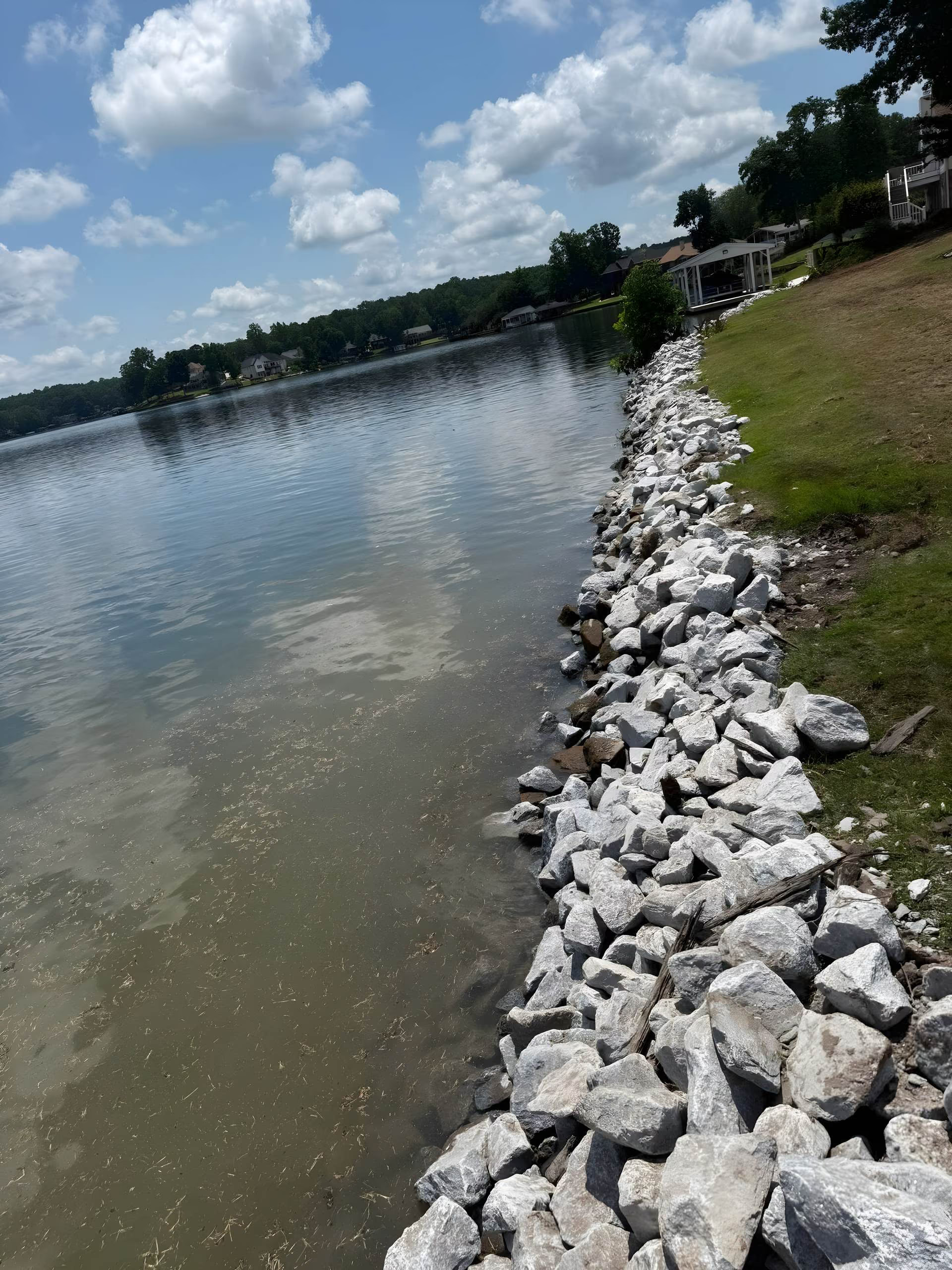 Completed
Before you build
The rules change with the water.
A seawall in west Georgia is never just a wall. On West Point Lake the shoreline belongs to the federal government. On Lake Tara the community association decides. Lake Carroll is the city's. A pond behind your house answers to the state and sometimes the Corps of Engineers.
We build and repair seawalls and riprap on all of them, and the first job is working out whose rules you are under. Tell us the lake and we will tell you who has to approve the work.
Rules that matter for your project here
Whose rules apply to your shoreline.
West Point Lake
The lake spans Heard and Troup counties in Georgia and Chambers and Randolph counties in Alabama, and the whole shoreline is federal land. The Corps' updated plan, in effect since October 1, 2025, allows limited shoreline protection with the lake office's approval. Riprap is the preferred method, concrete block walls are not allowed, and plans must be approved before construction.
Source: Shoreline Management Plan, s.9 and Corps release
Lake Tara, Fairfield Plantation
Seawalls are required on Lake Tara lots and not on Lake Ashley or Lake Scarlett. The Property Compliance Committee approves each one first, with a certified survey and an erosion control plan. The association must be called 24 hours before concrete is poured. Fairfield Plantation dock and seawall rules.
Lake Carroll
The city's code says the shoreline may not be altered in any manner without written consent and a permit from the building official. Lake Carroll dock rules.
Source: Carrollton Code Sec. 70-58
Mirror Lake, Villa Rica
The original covenants bar improvements on lakefront lots, retaining walls included, without written association approval, and ban land disturbance within 25 feet of stream banks. The document dates to 1998, so confirm the current version.
State and federal limits
Ponds, creeks and the Corps.
Georgia's 25-foot buffer
A 25-foot buffer runs along the banks of state waters, measured from where normal flow or wave action has wrested vegetation. On trout streams it is 50 feet. Only the EPD director can grant a variance.
Source: Georgia EPD buffer guidance
Nationwide Permit 13
Riprap, revetment, gabion baskets and bulkheads can ride on this permit at no more than 500 feet along the bank, averaging no more than one cubic yard of fill per running foot below the high-water line. The 2026 permits run to March 2031.
Source: Federal Register, 91 FR 768
A timber wall on West Point
Where a wall is approved, wood walls must use treated material, on posts at least 6 by 6, no more than 8 feet apart and set 4 feet below the bottom, with filter cloth, weep holes and a tieback every 8 feet.
Whether a small private pond counts as federal water is a separate determination. We raise it at the first visit.
Riprap or a wall
Which one holds your bank.
Riprap is loose stone set over filter fabric along the bank. It tolerates settling, and a shifted stone can be reset without taking the whole shoreline apart. That is why the Corps prefers it on West Point Lake. The full comparison is in our guide to seawall versus riprap.
A wall gives you a straight, usable edge for a dock walkway or a boat slip. Fairfield's rules approve plain or grouted riprap, concrete gravity walls, and pressure-treated wood on a concrete footing, and bar railroad ties, metal and plastic. Which one fits depends on the slope, the wave action, what sits behind the bank, and which rules govern the water.
Our work includes a long new seawall, riprap with erosion mesh along the bank of a 25 by 30 foot dock, and a 200-foot retaining wall. See our docks and boathouses and retaining walls.
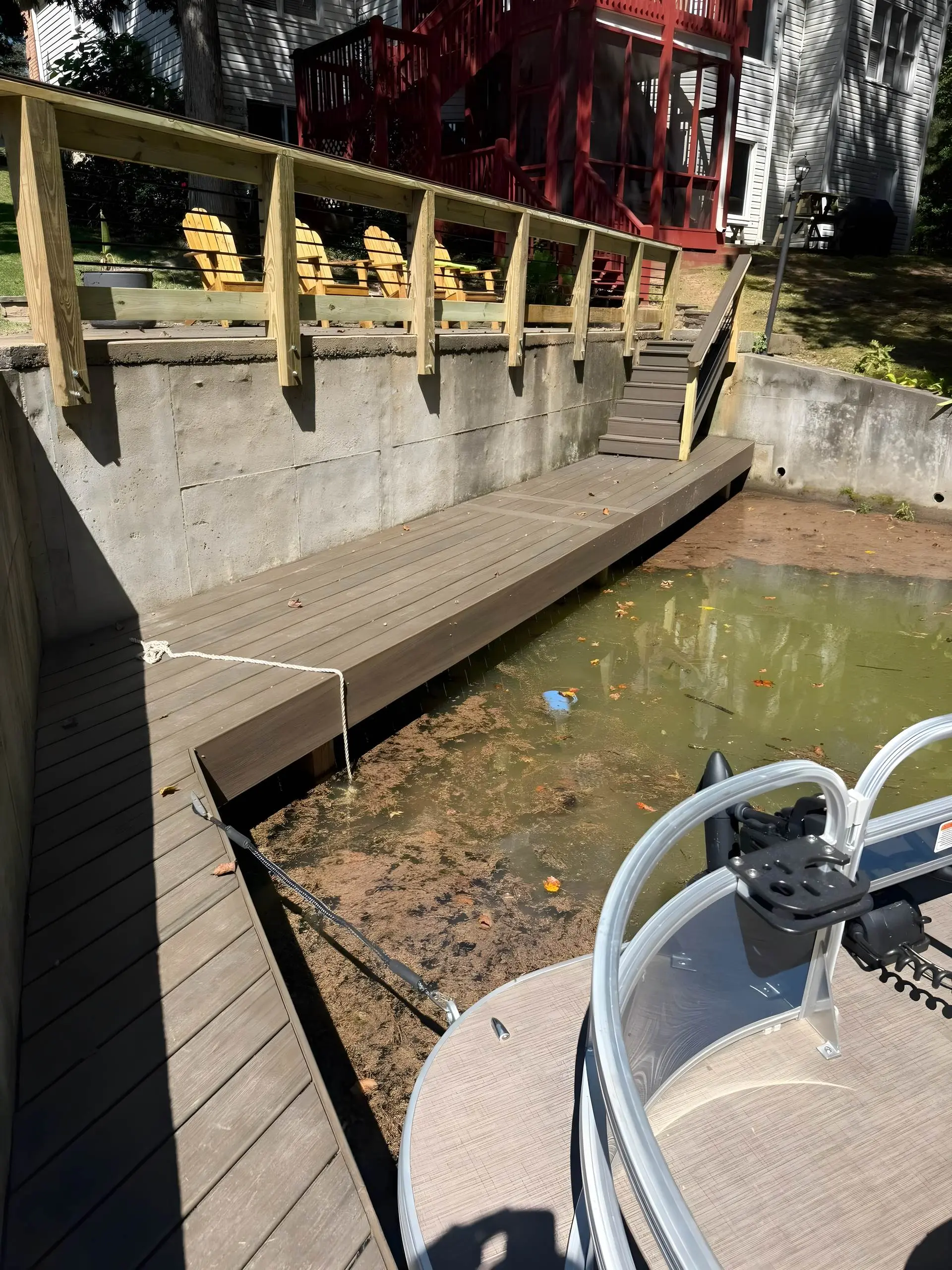 Completed
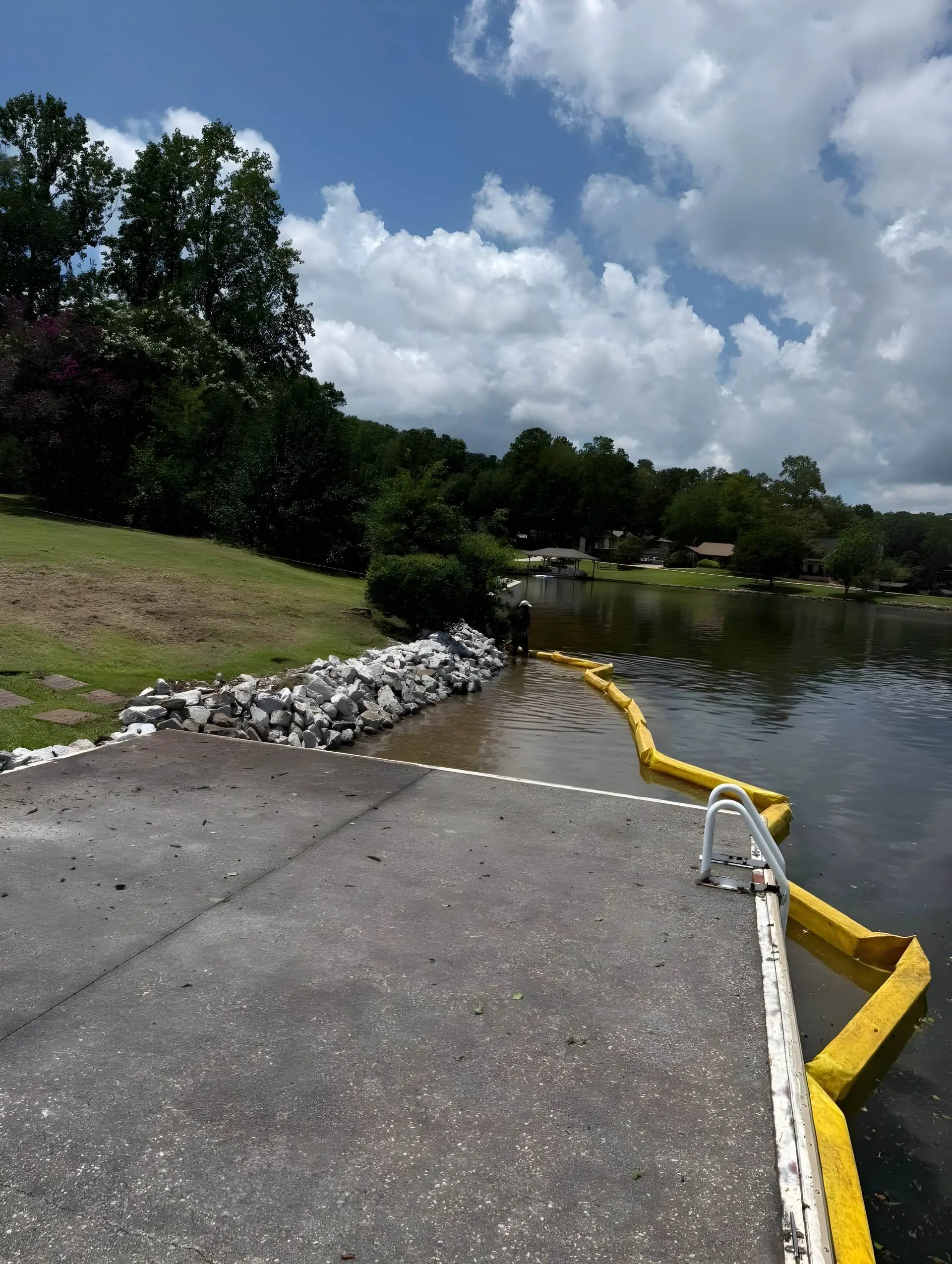 In progress
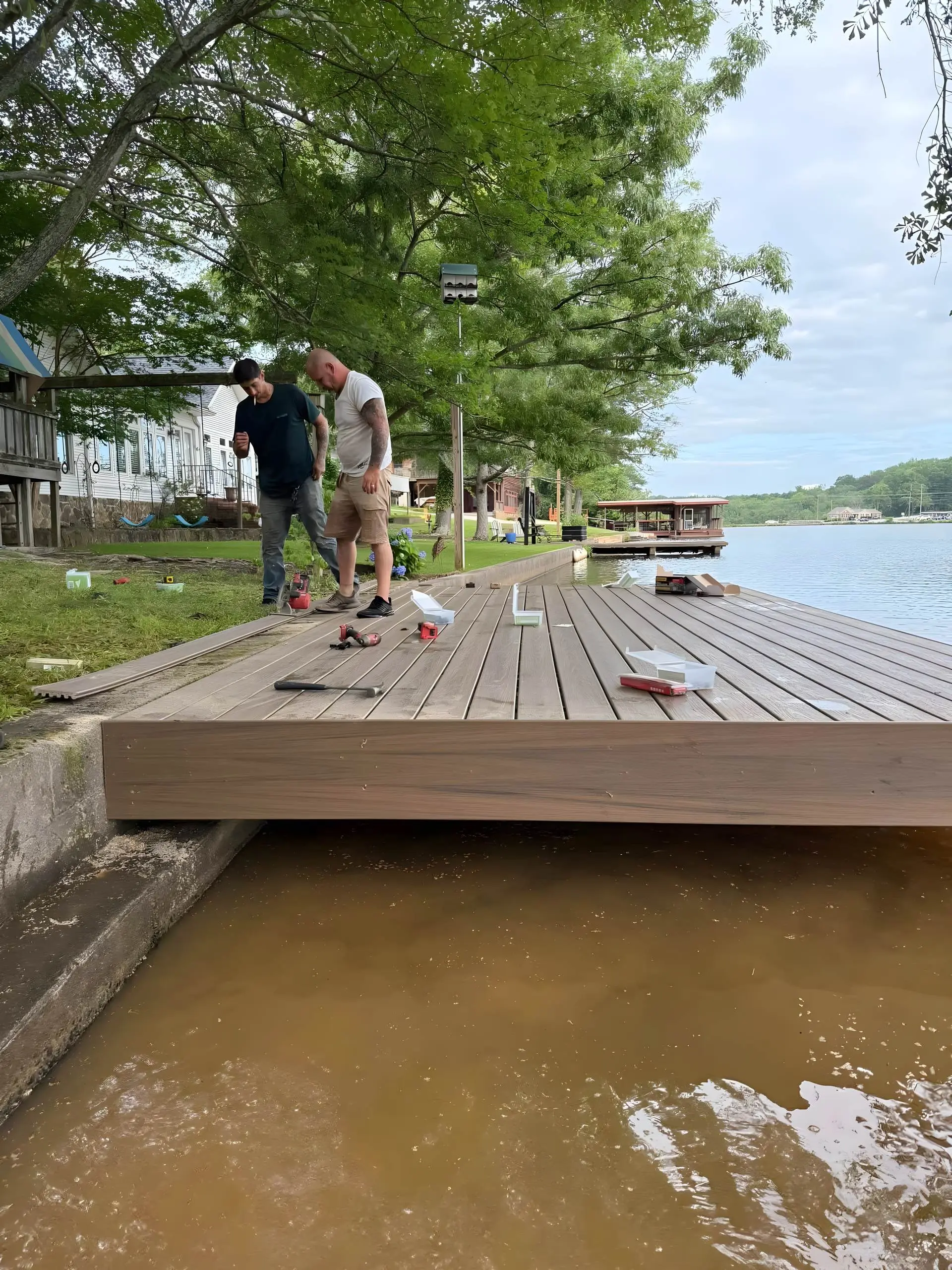 In progress
Repair or replace
Signs a seawall is failing.
Holes or dips behind the wall
Divots, holes or a dip in the ground near the wall can mean failure is happening below ground.
A wall that leans or bows
New leaning, bowing or wobble. A level held against the wall shows whether it is getting worse. On anchored walls, rusted connectors are a known weak point.
Cracks, holes and rot
Cracks and holes let soil escape. Severe rust, missing pieces and rotting boards are damage to fix.
Soil leaving through the wall
Engineers name fill seeping out through a timber wall, below its filter cloth, as a common way walls fail.
Riprap that has settled
Stones settle and shift with storms and waves, and some need replacing over time.
Scour at the base
Bare or undercut ground at the foot of the wall. Scour at the toe undermines a wall.
Why walls fail, what decides repair or rebuild, and how long a wall lasts are in our guide to seawall repair in west Georgia.
How it goes
From first call to final walk.
Send a quote request
Tell Ambrose the lake or pond and what the bank or wall is doing.
Settle whose rules apply
The lake office, the association committee, the city building official, or the state and Corps.
Estimate and approvals
You get an estimate. We coordinate the survey and engineer's plans the approving office requires, and handle the application paperwork.
Build with erosion control in place
Silt control goes in before we work at the edge, and concrete washout stays out of the lake.
Inspection and walkthrough
We arrange the inspections the approving office requires, then walk the finished shoreline with you.
Questions
Seawall questions.
Do I need a permit to repair a seawall?
Usually something. West Point Lake plans need approval before construction, Fairfield's committee reviews repairs and replacements, and Lake Carroll's shoreline needs a permit. On a private pond we check the state buffer and federal rules.
Can I use concrete block on West Point Lake?
No. The Corps' plan says concrete block walls are not allowed and names riprap as the preferred erosion control.
Is a seawall required at Fairfield Plantation?
On Lake Tara lots, yes. It is not required on Lake Ashley or Lake Scarlett. Either way, the committee approves the design first.
Does Georgia's 25-foot buffer stop me from working on my bank?
It can limit it. Only the EPD director grants variances, and a variance request tied to a federal permit is reviewed alongside it. Whether yours applies depends on the water; we sort that out first.
Riprap or a wall: how do I choose?
Riprap when the rules prefer it or the bank only needs holding. A wall when you need a straight edge for a dock or slip and the rules allow it.
Which counties do you cover?
Carroll, Haralson and Heard, plus the lake country around West Point Lake. Send a quote request to check your address.
Tell Ambrose about your shoreline.
Send Ambrose a quote request with the name of the lake and what the bank or wall is doing.