Decking guide
Composite vs pressure-treated decking in Georgia
Composite asks for soap and water. Pressure-treated wood asks for a stain or sealer on a schedule. Both sit on a pressure-treated frame. The better pick comes down to how much upkeep you will actually do and how much heat on bare feet you can live with.
The short version
Georgia is hard on decks. Summers are hot and humid, rain comes in bursts, and a shaded corner can stay damp for days. That climate decides which differences between composite and pressure-treated decking actually matter.
- Moisture and mildew: neither material is immune. Mildew needs dirt and damp, not a particular board.
- Heat: composite gets hot in direct sun, darker colors most. We found no maker source comparing it to wood, so we do not claim either is cooler.
- Upkeep: wood needs a finish renewed on a cycle. Composite needs cleaning.
- Structure: a composite deck still needs treated lumber underneath.
The rest of this guide covers each point with the source behind it.
Moisture, mold and mildew
The USDA Forest Products Laboratory's Wood Handbook separates two things people lump together. Serious decay only starts once wood stays above fiber saturation, about 30 percent moisture on average. Humid air alone will not wet wood enough to rot it, though it does allow mold fungi to grow. Fully air-dried wood sits at 20 percent moisture or below, which the handbook treats as a safe margin.
Mildew is a surface problem. The handbook says mildew fungi live on any surface with a food source, such as dirt, and that they do not decay the wood. The handbook says mildew is most common in shaded, moist or protected areas. Think of the north side of a deck under a roof overhang.
Composite is not exempt. Trex's care and cleaning guide says debris such as pollen and dirt gives mold something to feed on. The fix it gives is a hose, warm soapy water and a soft bristle brush. The Wood Handbook adds that decay fungi can form voids in wood-plastic composites once moisture gets in through surface cracks, so a composite board is not a wood-free board.
Heat on bare feet
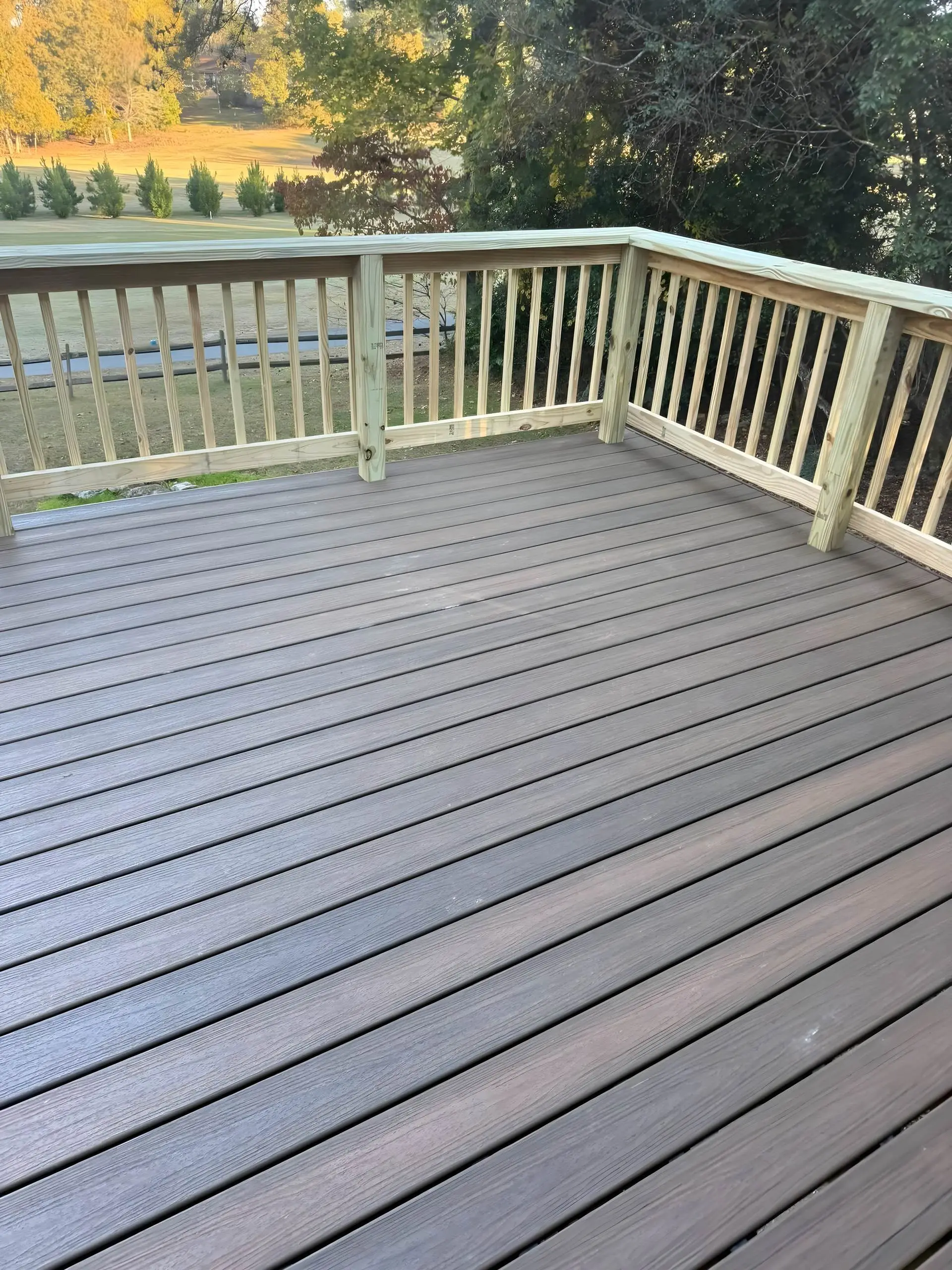
Trex says on its heat resistance page that even its cooler-running line "will get hot in direct sun on hot days, especially darker colors," and that you should avoid extended skin contact, especially for young children. Take that at face value. A dark composite board in July afternoon sun in Villa Rica will be hot.
If the deck faces west, or sits over a pool with kids running on it, pick a lighter color than you first wanted and think about shade. Test a sample board in the sun at the time of day you will use the deck.
Fading and staining
Wood fades because sunlight weathers it. The Wood Handbook says finely ground pigment partially blocks UV radiation, and that the higher the pigment concentration, the longer the finish lasts.
Composite makers handle fading and staining through warranties. Trex states that its decking and railing limited residential warranties run from 25 to 50 years depending on the product, and that spills must be cleaned within seven days to keep the stain warranty valid. Terms differ by brand, product line and color, so read the warranty for the exact board you are buying instead of trusting a general claim. That includes ours.
Maintenance and staining cycles
The Wood Handbook's Table 16-2 gives estimated finish life for decking, for the average location in the contiguous United States. Your deck's life depends on climate and exposure.
| Wood surface | Tinted deck finish | Semitransparent stain |
|---|---|---|
| New, smooth-sawn decking | 1 to 2 years | 2 to 3 years |
| Weathered or saw-textured decking | 2 to 3 years | 3 to 6 years |
The same table rates paint and solid-color stain as low suitability for decking, since film-forming finishes on decks commonly peel. If you go with wood, plan on a penetrating semitransparent finish and a recheck every couple of years. Our guide to when to stain covers timing, and we do staining and painting if you would rather not.
Composite maintenance is cleaning. Sweep off debris, and wash with soapy water and a soft brush when pollen season or shade growth shows up.
Lifespan
Warranty length is not lifespan, but it is the figure Trex publishes, and it runs 25 to 50 years by product.
For wood, the Wood Handbook has a useful point. Wooden decks are most commonly replaced because of checking and splitting, not decay. It says the best way to prevent checking and get 40 or more years of service life is to make sure water beads up on the surface instead of soaking in. That is a best case and it depends on keeping the finish up. A neglected wood deck will not get there.
The frame underneath is treated lumber either way
Choosing composite changes the boards, not the structure. The American Wood Protection Association's U1 standard sorts treated wood into use categories by exposure, and decks fall into three of them.
- UC3B (above ground, exposed): decking, railings, and joists and beams for decks and freshwater docks.
- UC4A (ground contact or fresh water): deck and guardrail posts, cantilevered members, and joists and beams that are critical or hard to replace.
- UC4B (heavy duty): the standard lists permanent wood foundations and structural support posts for buildings here.
AWPA's residential infographic gives the same split in plain terms: deck boards, rails and stairs at UC3B or higher, and posts in ground contact at UC4A or higher. It marks ledger boards at UC4A or higher too. Check the tag on your lumber, and ask your builder which category went into your frame.
Fasteners, spacing and joist tape
Three details separate a composite deck that lasts from one that gives trouble.
Joist spacing
Trex's joist installation guide says joists under composite decking should generally be no more than 16 inches on center for standard applications, that diagonal board layouts need 12 inches, and that 12 or less may be required for heavier loads, long spans or intricate patterns. It also says to follow local code. Ambrose's public job posts show several Trex decks and docks framed 12 inches on center.
Joist tape
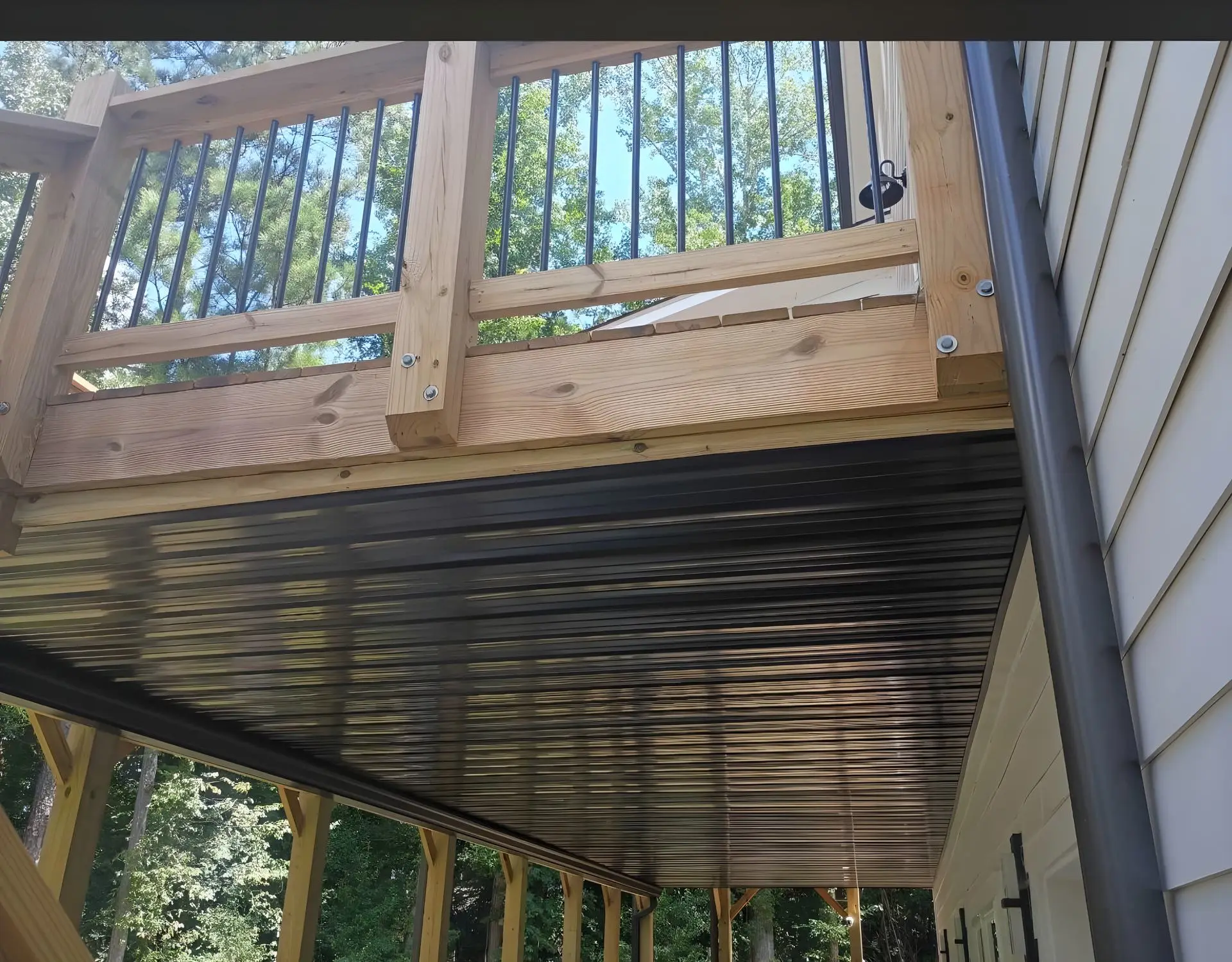
The tops of joists get wet and stay wet, and screws pass through them. Trex Protect is a butyl tape made to shield the tops of joists, rim joists and beams from moisture. Trex says it helps screws hold longer than acrylic or asphalt-based tapes do, acts as a barrier between wood and galvanized metal such as joist hangers, and carries a 25-year warranty. A Trex founder says that if you ask a contractor where a deck is most likely to fail, chances are they will point to the ledger board. Our public job posts show joist tape on composite decks and docks.
Hidden fasteners
Trex's fastener guide lists hidden clips that set board spacing automatically and leave an unblemished surface, plus color-matched screws and plugs for face-fastening. Hidden fasteners suit a field of grooved boards. Face screws are still used at edges, stairs and fascia.
What changes on a dock
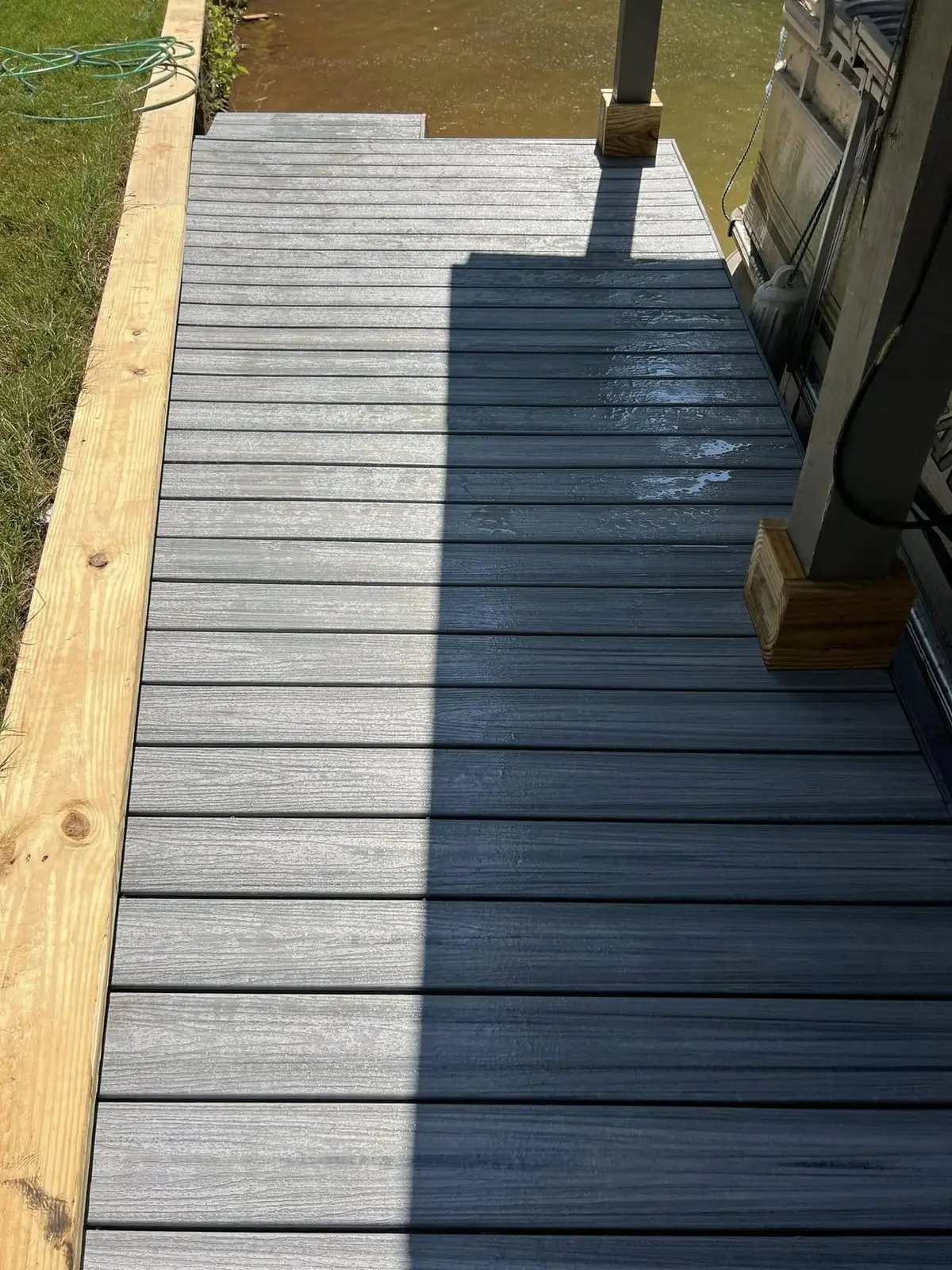
AWPA puts joists and beams for freshwater docks in the same categories as deck framing, so the lumber under a composite dock is the same class of treated wood described above. Water is closer, so ask about moisture protection on the frame. Our public job posts include a 10 by 20 foot Trex dock in Toasted Sand framed 12 inches on center with joist tape, and walkway docks with Trex decking and rebar handrails.
How to choose
- You want the lowest upkeep: composite, with a lighter color if the deck gets afternoon sun.
- You like the look and feel of wood and will refinish it: pressure-treated, with a stain schedule you will keep.
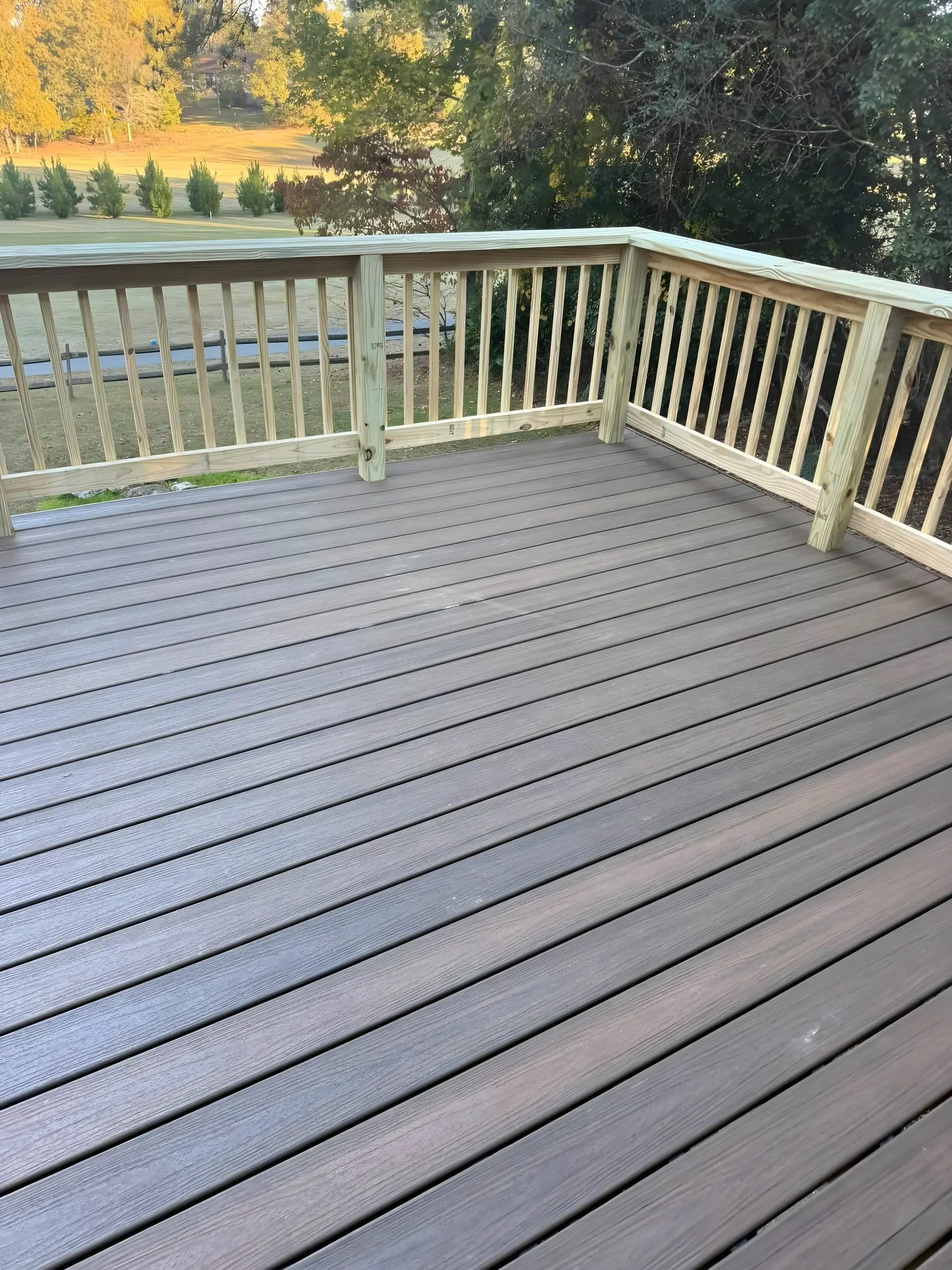
- Mixed: composite floor with pressure-treated railings, as in the photo at the top.
- Existing frame in good shape: composite boards can go over sound framing, though the spacing has to meet the maker's rule.
Questions people ask
Does composite decking get moldy in Georgia?
It can. Trex says pollen and dirt give mold something to feed on. Regular cleaning with a hose, warm soapy water and a soft brush is the maker's answer.
Is composite cooler than wood?
Not necessarily. Trex says its decking will get hot in direct sun, especially in darker colors. We have no source comparing it directly to wood.
Can I put composite over my old frame?
Sometimes. The frame has to be sound and meet the maker's joist spacing, and you need to check for rot at the ledger and posts first. Have someone look at it in person.
Does a composite deck need a permit?
Building one usually does. See our Carroll County deck permit guide.
What is joist tape for?
It covers the top of the framing where water collects and screws pass through. Trex says it helps screws hold and separates wood from galvanized metal.
Sources
- USDA Forest Products Laboratory, Wood Handbook, FPL-GTR-282 (2021): chapter 14 (decay and moisture), chapter 16 (finishing, Table 16-2).
- American Wood Protection Association, Standard U1-25, Use Category System and the residential infographic.
- Trex: care and cleaning, heat resistance, warranty, joist installation, fasteners, Trex Protect, ledger and rim tape announcement.
Product details change. Check the current manufacturer instructions and warranty for the product you buy.