Staining guide
When to stain a deck in west Georgia, and how often
Stain a new pressure-treated deck once it has dried out. Sprinkle water on the boards, and if it soaks in quickly, they are ready to prep. Stain on a dry day when air and deck surface are between 50 and 90 degrees, with no rain coming. After that, expect to redo a semi-transparent stain about every two to three years on new boards.
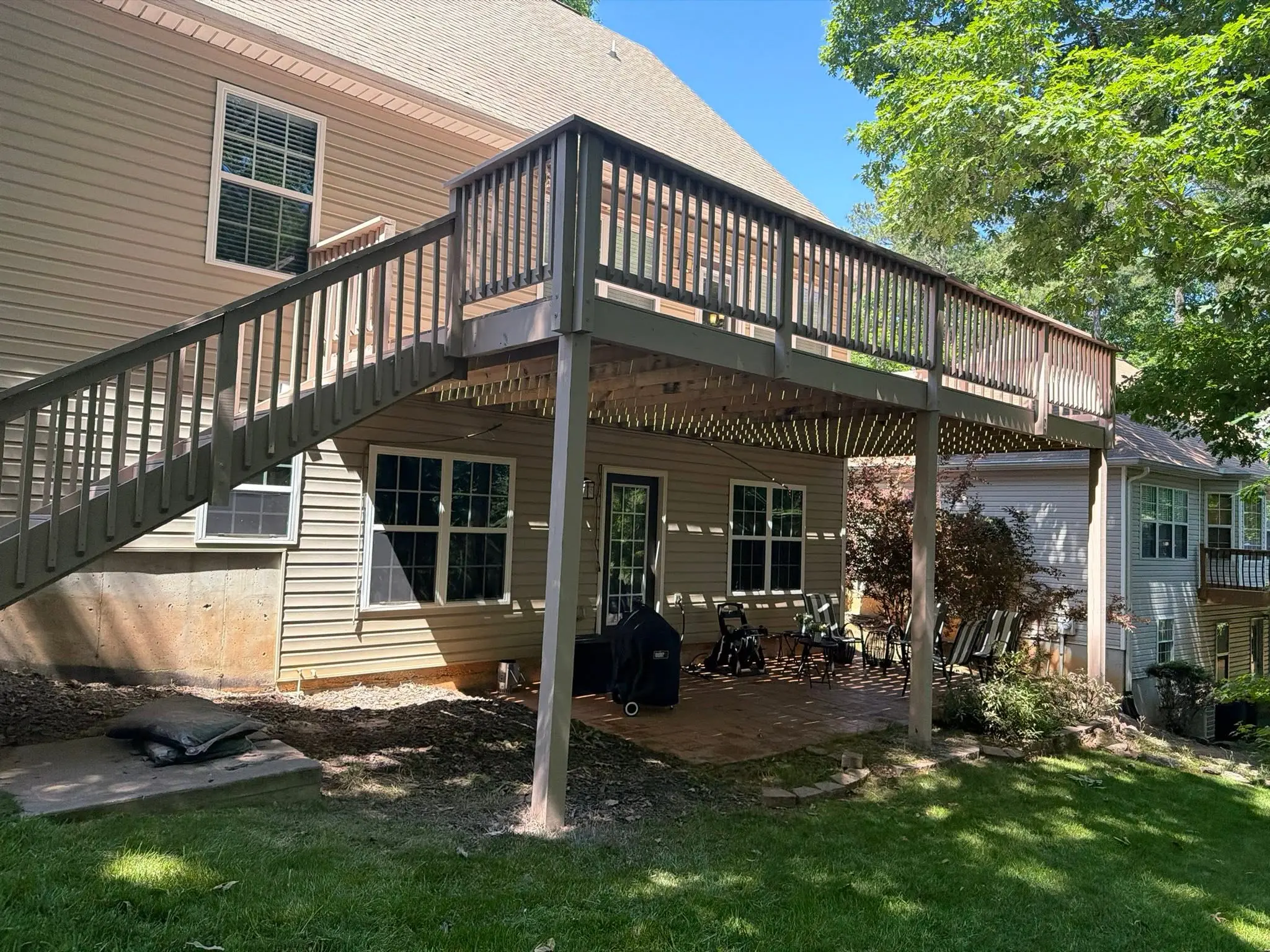
A new pressure-treated deck: wait, then test
New treated lumber is often still wet from the treatment process. The USDA Forest Products Laboratory's Wood Handbook says treated lumber can still be above saturation when it is installed, and "nothing will coat wet wood well." Its two options are to wait for it to dry and use a penetrating finish, or to buy lumber that was kiln-dried after treatment.
Stain makers give you ways to check. Ready Seal's FAQ recommends wood at 12 percent moisture or less, measured with a moisture meter, and says new pressure-treated lumber needs at least one month of dry time, with two to three months of aging recommended. Cabot's product page gives a test that needs no meter: sprinkle a few drops of water on the surface, and if they are quickly absorbed, the surface is ready to prep.
If the water beads up and sits, wait and test again. The lake house deck in the photo above was built one year and stained the next.
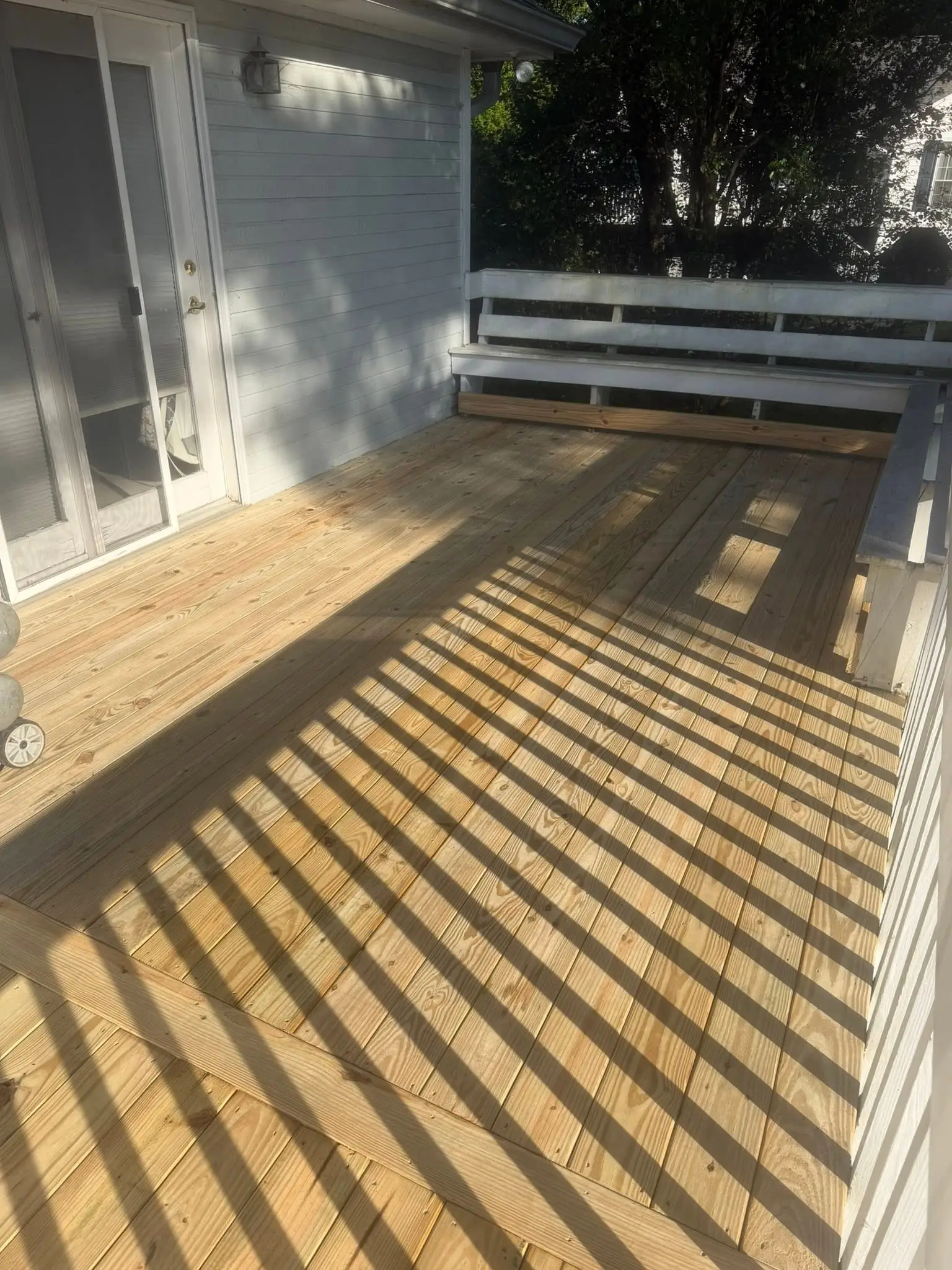
Weather windows from the label
Read the label, because it sets limits that matter more than the calendar. The Cabot Australian Timber Oil product data sheet says:
- Do not apply below 50 degrees Fahrenheit, or if the temperature may fall below 50 within 48 hours after application. Cabot's product pages give a 50 to 90 degree range for air and surface.
- Do not apply in direct sunlight or onto hot surfaces.
- Do not apply over wet or damp surfaces or when rain is imminent.
- Let the surface dry 24 to 48 hours after cleaning.
Cabot's semi-transparent stain page lists a 24 to 48 hour dry time and says to always test a small area first. Ready Seal asks for 48 hours or more of drying after cleaning.
Put those limits next to a west Georgia summer. A deck in afternoon sun can run well past the 90 degree surface limit, and a summer thunderstorm can arrive before the stain has set. That points to a morning in spring or fall, a stretch of dry days, and shade or early hours for the sunny side. The labels we read give temperature and rain limits and do not give a humidity figure, so we do not invent one. Check the can you bought.
Also watch your sprinklers. Ready Seal warns that sprinkler marks can age a deck unevenly.
Semi-transparent or solid
The Wood Handbook's Table 16-2 rates paint and solid-color stain as low suitability for decking, because film-forming finishes on decks peel very commonly. It lists tinted deck finishes and semi-transparent stains as the better choices, and that more pigment means a longer finish life. That matches what we do. Ambrose's public job posts mention staining decks semi-transparent.
Semi-transparent stain lets the grain show and soaks in. Solid stain sits on top like paint, which is why it peels on a surface people walk on. If a deck is already coated in solid stain or paint, the choice of what goes next depends on the condition of that coating.
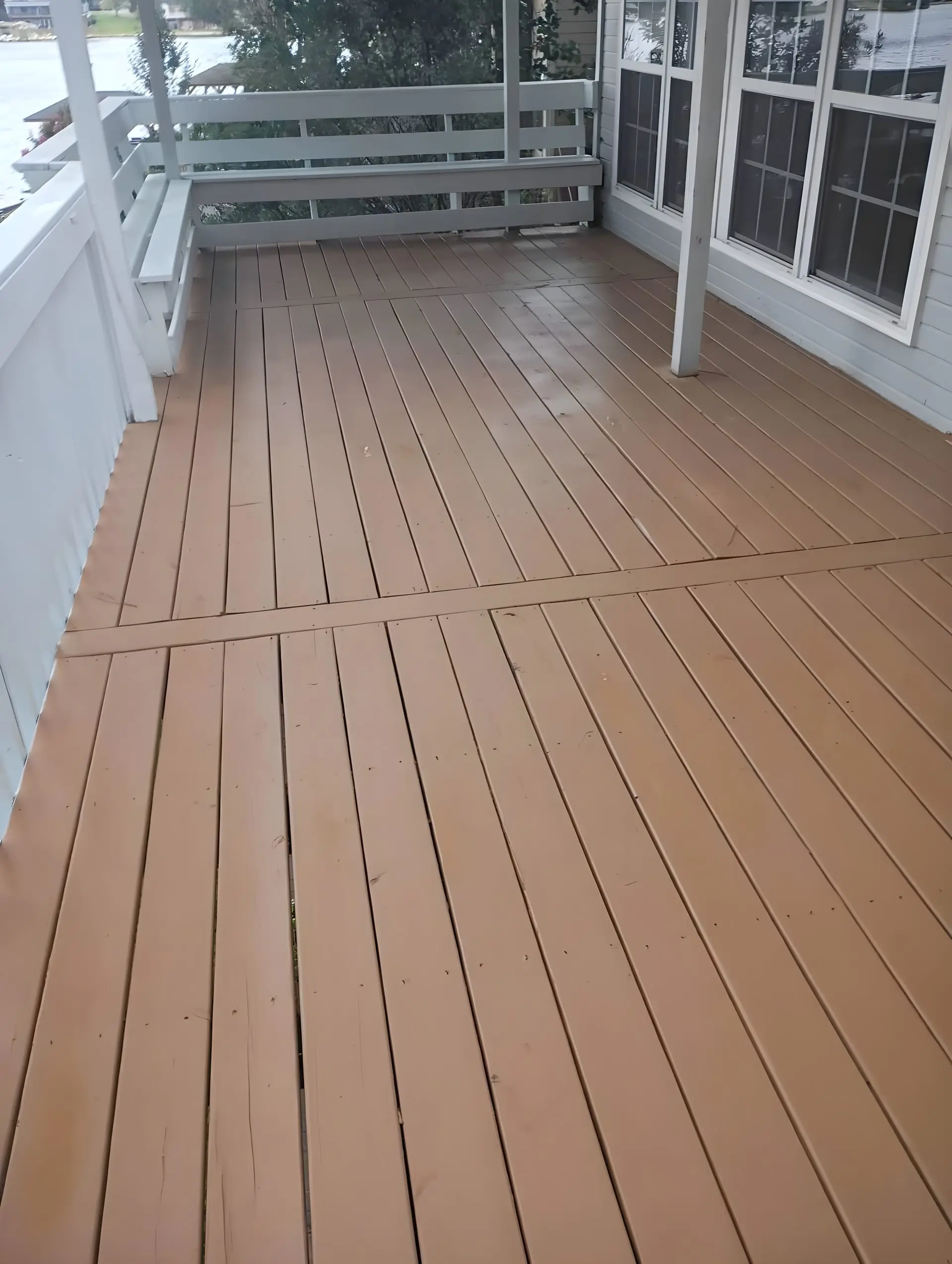
Prep is most of the job
Stain only works on clean, dry wood. The labels we read agree on the order.
- Clean. Cabot sells a wood cleaner and says to remove mildew with it. Mildew feeds on dirt, as the Wood Handbook explains, so cleaning removes the food as well as the stain.
- Brighten. Cabot recommends its wood brightener for extractive bleeding, the tan or brown blotching that bleeds out of some wood. Ready Seal says to use an oxalic acid brightener after cleaning to remove that discoloration.
- Dry. At least 24 to 48 hours per Cabot, 48 hours or more per Ready Seal.
- Test a small spot. Both brands say to.
- Apply. The Wood Handbook says smooth, unweathered surfaces are generally finished with one coat, and weathered or saw-textured boards can take two, with the second coat applied while the first is wet. Older wood absorbs more stain and looks darker than new boards, per Ready Seal.
We are not giving cleaner mix ratios or chemical advice here. Follow the label for the products you choose.
Signs it is time
- Water soaks in. The Wood Handbook says the way to prevent checking is to keep water beading on the surface. If drops darken the wood instead of sitting on it, the finish has stopped working.
- Mildew keeps coming back. The handbook's finish table says mildew growth usually indicates the need for refinishing.
- Color is gone. Weathered gray or patchy color means the pigment that was protecting the wood has worn away.
- The spring check. Cabot's data sheet says to evaluate the finish each spring and maintain it as needed.
How often
The Wood Handbook estimates the following for the average location in the contiguous United States, and says life depends on climate and exposure.
| Deck surface | Tinted deck finish | Semitransparent stain |
|---|---|---|
| New, smooth-sawn decking | 1 to 2 years | 2 to 3 years |
| Weathered or saw-textured decking | 2 to 3 years | 3 to 6 years |
A shaded, damp deck may need it sooner and a sunny open one may fade sooner, so use the water test and the spring check, not the calendar. The same table gives one to three years for a clear water-repellent preservative.
Docks vs decks
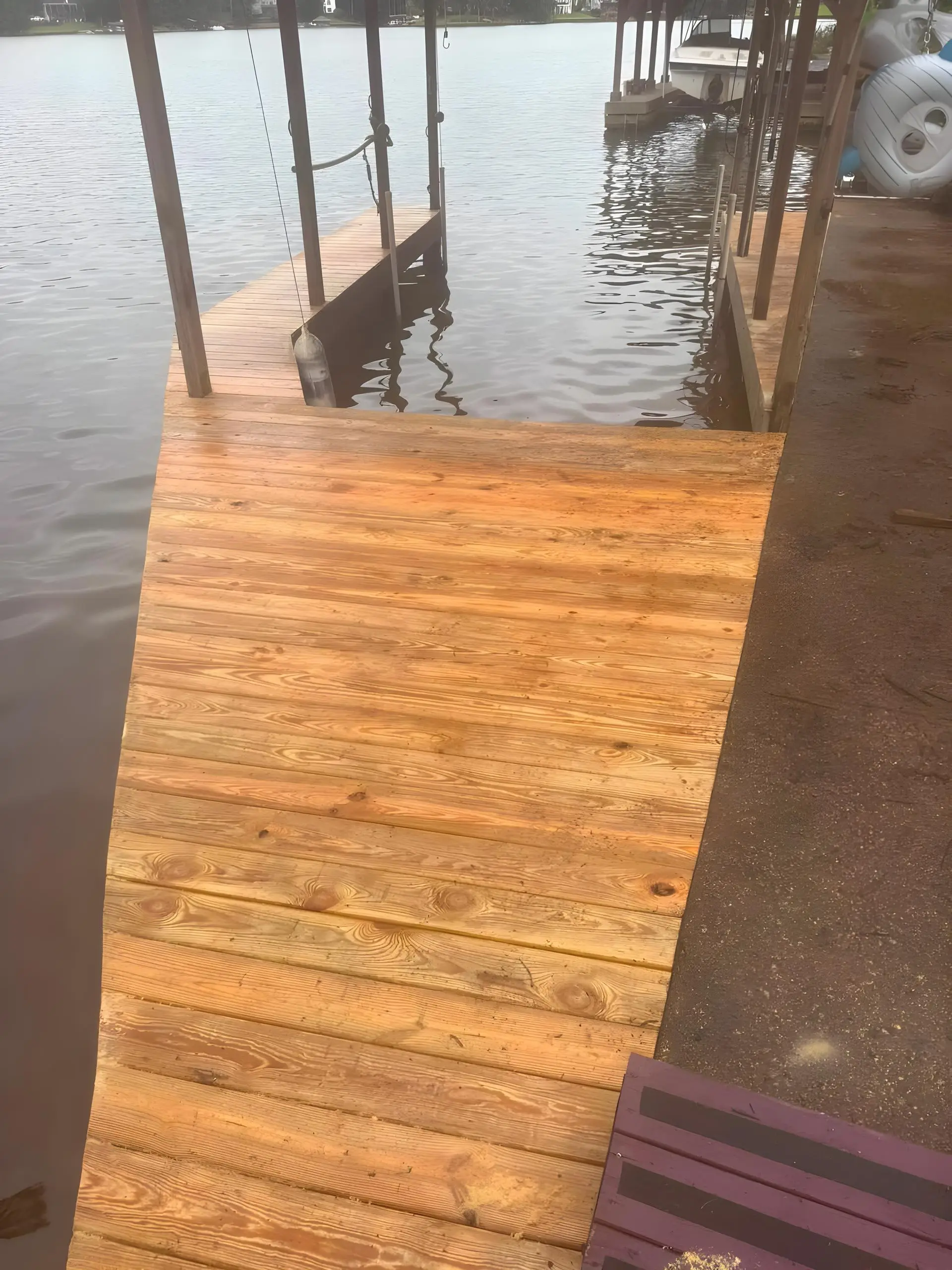
A dock is a deck that sits over water. The same label limits apply: dry wood, the temperature window, no rain, no standing water. The Wood Handbook says mildew is most common in shaded, moist or protected areas, and boards near the waterline can stay damp. We did not find a manufacturer stain schedule written for docks, so check a dock with the water test before you plan around a deck's interval.
When to call a pro
Staining is a good do-it-yourself job when the deck is small and the boards are sound. Call someone when the deck is elevated, when old film-forming coating has to come off first, when boards are loose or soft, or when you would rather not spend two dry weekends on it. Ambrose handles deck staining and painting alongside deck and dock building.
Questions people ask
How long should I wait to stain a new pressure-treated deck?
Until it passes the water test. Ready Seal says at least one month and recommends two to three months. A moisture meter reading of 12 percent or less is their target.
What temperature is too hot or too cold to stain?
Cabot's data sheet says not below 50 degrees Fahrenheit, not onto hot surfaces, and not in direct sunlight. Its product pages give a 50 to 90 degree window.
Should I use semi-transparent or solid stain?
Semi-transparent. The Wood Handbook rates solid-color stain and paint as low suitability for decking, because they commonly peel.
Can I stain right after cleaning?
No. Cabot says 24 to 48 hours of drying, Ready Seal says 48 hours or more.
Do I need to stain a composite deck?
No. See our composite vs pressure-treated guide for how composite is cleaned instead.
Sources
- USDA Forest Products Laboratory, Wood Handbook, FPL-GTR-282 (2021), chapter 16 (finishing, Table 16-2) and chapter 14.
- Cabot: Australian Timber Oil, its product data sheet, and Semi-Transparent Stain and Sealer.
- Ready Seal, frequently asked questions.
Stain products differ. The can in your hand governs: read its label before you start.